
Newly constructed houses often feature roof spaces designed primarily for insulation, ventilation, and structural integrity rather than storage. Despite this, many homeowners look to transform this unused area into something more practical to declutter their living spaces. The challenge lies in doing so without compromising the delicate structural balance or the stringent energy-efficiency standards required in contemporary builds. Understanding how these lofts are designed, and why certain precautions exist, is crucial before making any changes.
How New Builds Differ from Older Properties

Truss and Joist Design: Traditional homes (pre-1960s) were typically built with robust “cut roofs” featuring thick timber joists capable of supporting heavier loads. Newer houses, however, frequently use prefabricated lightweight truss systems (often W-shaped). These are engineered precisely for the loads specified in building regulations—primarily the weight of the roof tiles and wind/snow loads—rather than the weight of stored boxes and people walking. This approach improves efficiency and reduces construction costs, but it leaves little margin for additional weight without appropriate reinforcement or specialised systems.
Insulation Requirements: Energy standards have risen significantly in an effort to reduce carbon emissions. Deep layers of mineral wool insulation (often up to 270mm or more) are now installed between and over the joists. This means the floor level in a modern loft is significantly higher than the joists themselves, making it less straightforward to adapt. Compressing this insulation to fit boards directly onto joists is not an option; doing so reduces its thermal performance by over 50% and can create “cold bridges” where heat escapes rapidly.
Navigating Warranties and Insurance
A major concern for owners of new properties is the impact of loft work on their build warranty, such as the NHBC (National House Building Council) warranty in the UK. Driling into or cutting roof trusses can weaken the structure and potentially void these warranties. Therefore, it is vital to use systems designed to clamp onto the joists rather than those requiring invasive fixings. A non-invasive approach ensures that the structural integrity remains intact and the warranty valid, providing peace of mind alongside extra space.
Considering Building Regulations and Load
Load-Bearing Capacity: Before altering a loft, it is essential to assess how much weight the existing joists can safely support. Exceeding this could lead to structural damage, ceiling cracking in the rooms below, or worse. Any significant adaptation, particularly if intended for heavy items, may require guidance from a structural engineer.
Fire Safety and Access: If the purpose is simple light storage, access requirements remain minimal. However, if the space becomes more frequently used, safe and stable access becomes increasingly important. This includes using appropriate, securely fixed ladders (often aluminium or timber folding styles) and ensuring the loft hatch is sufficiently sized to allow items to pass through without struggle.
Suitable Uses for a New Build Loft
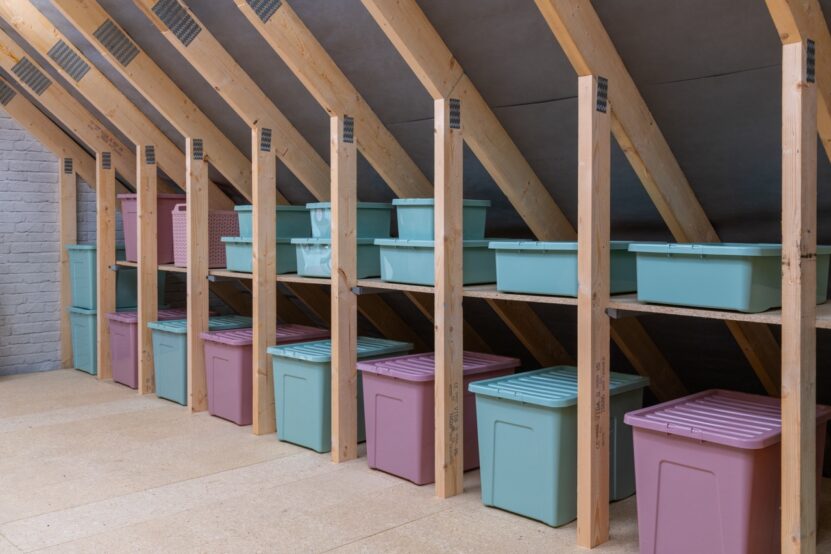
Lightweight Storage Most new properties can accommodate limited storage, provided the weight is distributed evenly and appropriate flooring solutions are used. Seasonal items, suitcases, boxed decorations, and other light belongings are generally suitable. It is not a place for heavy furniture, weights, or dense archives of books.
Service Access Boilers, solar inverters, water tanks, MVHR (mechanical ventilation) systems, and network wiring are often positioned in lofts. Ensuring safe, illuminated access for maintenance personnel without them having to balance on trusses or disturb insulation is a practical necessity.
Practical Solutions for Maximising Space

Raised Flooring Systems: The industry standard for modern homes is a raised system that allows boards to sit above the depth of the insulation. This prevents compression and maintains efficient airflow. These solutions usually involve installing a sub-frame or modular plastic supports (“loft legs”) designed specifically for lightweight storage. This is where loft boarding new build installations typically focus, offering a balance between convenience and compliance. By creating a floating deck, the weight of the storage is transferred safely through the supports to the strongest parts of the structure, rather than putting point loads on weak sections.
Insulation Protection: Protecting insulation from physical damage is essential. Boards placed directly on top of insulation restrict airflow and squash the fibres, decreasing efficiency. A well-designed raised solution avoids these issues, ensuring the home remains warm in winter and cool in summer.
Ventilation and Condensation Risks: Modern homes are sealed almost hermetically to prevent heat loss. However, this means moisture generated from cooking, showering, and breathing needs a path to escape. If a loft is boarded incorrectly, it can block the airflow from the eaves, trapping moisture. This leads to “interstitial condensation”—where water droplets form on the underside of the roof or within the insulation. Over time, this causes mould growth and can rot roof timbers. A raised flooring system must preserve the air gap between the insulation and the boards to allow this moisture to evaporate naturally.
Planning Before Installation
Assessing the Existing Layout: Before deciding what solution to use, inspect the positioning of pipes, wiring, water tanks, and truss arrangements. Some layouts limit how much of the area can be floored, while others allow for a more generous space.
Lighting and Visibility: Storage is useless if you cannot see it. New build lofts often lack adequate lighting. Installing safe, energy-efficient LED tube lighting is highly recommended. Good visibility reduces the risk of accidents, such as stepping off the boarded area onto the fragile plasterboard ceiling.
Professional vs. DIY: While boarding might seem like a simple DIY task, the complexity of truss roofs makes it risky for amateurs. Navigating hidden cables, avoiding pipe compression, and levelling a floor across uneven joists requires skill. Professional installers use laser levels and specialist tools to ensure the platform is secure and safe, mitigating the risk of putting a foot through the ceiling.
Environmental and Energy Considerations
Maintaining Thermal Performance: Energy-efficient homes rely on uninterrupted insulation layers. Any work in the loft should support, not undermine, this design. Good practice ensures the insulation remains at its intended depth and coverage.
Avoiding Condensation: Poorly installed flooring can restrict ventilation, increasing the risk of moisture build-up. This may lead to damp issues in both the loft and the rooms below. Proper airflow design helps maintain a healthy environment throughout the home.
Conclusion
Transforming the unused upper space of a new build into something functional is achievable with careful planning and an understanding of the limitations of modern construction. By respecting insulation depths, maintaining critical ventilation pathways, and adhering to load-bearing constraints, homeowners can create a practical, safe storage area without compromising their home’s structure or energy efficiency.