
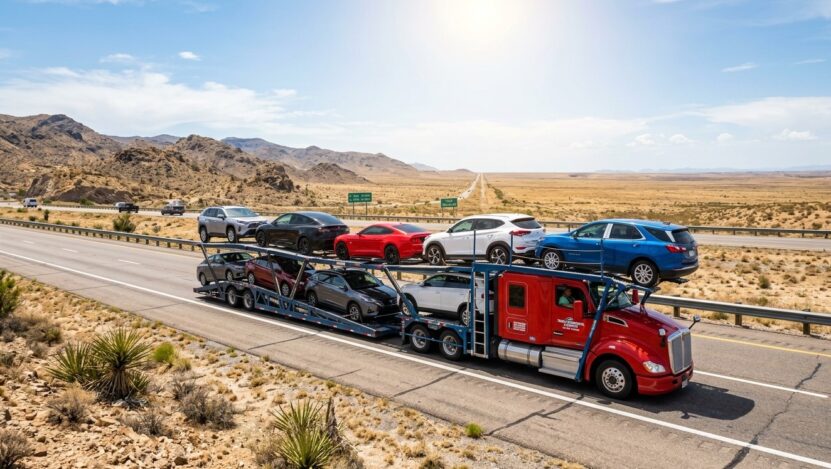
Five years ago, the Los Angeles to Austin auto transport lane was a back-haul afterthought. Carriers picked up loads in California, ran east, and prayed for a paying return trip. By the end of 2025, the same lane was running both directions full, with 14-day waits during peak weeks and pricing that climbed 22% over 2024.
The driver shortage didn’t get worse.
The lane just got busy.
Texas is the second-most-popular state to ship a car TO in the country, behind Florida, and the most popular state to ship from California in particular.
The corridor is the largest single inter-state vehicle flow in the United States. If you’re planning the move yourself or budgeting it for somebody else, the carrier economics are doing something they haven’t done in 15 years.
Here’s the read on where the lane is right now.
What Drove the Doubling
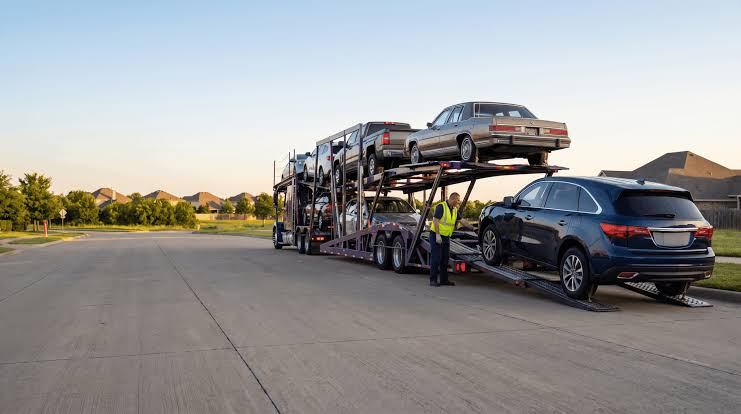
Three things hit at once. Tesla finished phasing in Giga Texas through 2023, pulling thousands of California employees east. Oracle moved its HQ from Redwood City to Austin in 2020 and kept reorganizing through 2025. Toyota’s North American HQ in Plano kept hiring.
The state added more than 470,000 net residents in 2024, the most in the country, per U.S. Census Bureau state population estimates.
Behind those three are smaller waves. A tech-worker exit from the Bay Area that accelerated after remote-work policies tightened again in 2024. Real estate price differentials that, even after Austin’s run-up, still favored Texas. The state income tax math, which hasn’t changed but keeps mattering more as California’s top brackets adjust.
The carrier side is the part most movers don’t see. A Los Angeles to Dallas open-transport run was a $750 lane in 2021. In 2024 it was running $900 to $1,050. By Q3 2025, the same load was quoting $1,150 to $1,400 depending on how far in advance you booked.
What It Actually Costs in 2026
For an open transport carrier, the standard option used in about 90% of moves, the current pricing on the four busiest California-to-Texas legs:
- Los Angeles to Austin: $1,150 to $1,400. Highest-volume corridor. Capacity is best mid-week.
- Los Angeles to Dallas: $1,100 to $1,350. Slightly cheaper than Austin because more carriers terminate naturally in DFW.
- San Francisco to Austin: $1,250 to $1,500. Bay Area pickups command a $100 to $150 premium because of urban routing.
- San Diego to Houston: $1,200 to $1,450. Slightly longer mileage but easier carrier flow through the I-10 corridor.
Enclosed transport runs 35% to 50% higher across all four. Luxury and exotic moves sit around $1,800 to $2,400 on the same lanes.
The 22% year-over-year jump on these routes is the highest in the country. The national average for 2025 cross-country pricing was up 8% to 11%. Texas inbound from California is its own market.
The Two Buyer Segments You’re Probably One Of
Almost everybody booking this lane right now is in one of two camps.
The relocating employee. Job offer in Austin, Plano, or Houston. Sign-on package may or may not include relocation. If it does, the company’s relo provider books a national broker. If it doesn’t, and increasingly it doesn’t for engineers and mid-level hires, the employee handles it solo.
They Google for the best auto transport company at 11 PM on a Thursday, get six broker calls Friday morning, and book whichever feels least sketchy.
The DIY mover. Family move, often with two vehicles. Drive one, ship the other. Often booked 2 to 3 weeks too late because moving day got pushed back. Almost always shocked at the difference between the lowball quotes and the carriers who’ll actually pick the car up on time.
If you’re either, the practical question is the same: how do you get the car onto a truck that’ll actually arrive?
Carrier Capacity: The Back-Haul Imbalance Is Gone
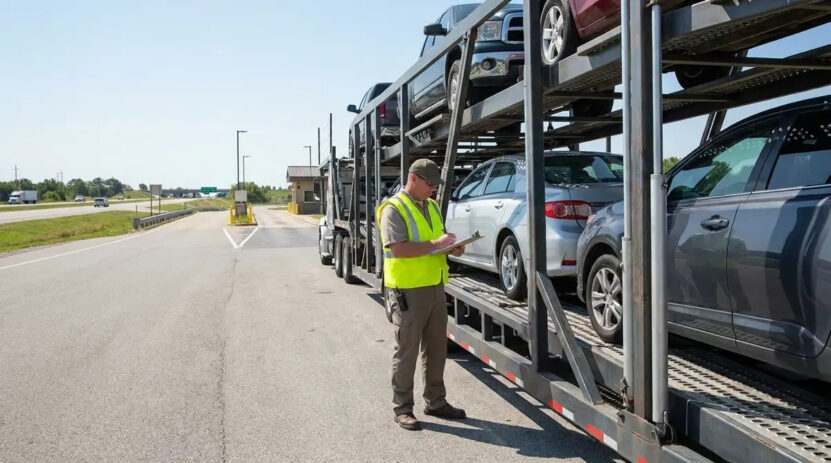
The math that made this lane cheap for years was simple. Trucks running from California to Texas were eastbound back-hauls. Carriers wanted any paying load just to cover fuel home.
Now those trucks have full eastbound loads booked weeks out. The back-haul discount is gone.
What that means in practice: you can’t show up on a Wednesday and find a carrier for Friday. You probably can’t even find a carrier for the following Wednesday.
The 7-to-10-day booking window that worked in 2022 has stretched to 14 to 21 days for any reasonable price. Inside two weeks, you’re paying expedited premiums or sitting on a wait list.
Verify any broker or carrier you book on the FMCSA SAFER system before you put a deposit down. The companies that are honest about their lead times are the ones worth booking.
The ones promising next-day pickup on this corridor right now are either lying or planning to renegotiate after they have your money.
Timing the Move
The pattern that works for this lane in 2026:
- Book 21 days before your earliest acceptable pickup date
- Build in a 4 to 5 day pickup window (carriers won’t quote a hard date on this corridor inside two weeks)
- Plan 5 to 7 days transit (LA to Austin or Dallas), 4 to 5 days (San Diego to Houston)
- Schedule your destination move-in for two days after the latest expected delivery, not the earliest
The biggest mistake I see on this lane is people stacking flights, closing dates, and car delivery within 48 hours of each other. The carrier hits a weather delay or a mechanical, the whole sequence collapses. Build slack into the back end, not the front.
When you’re comparing brokers, ABC Auto Shipping and others who run this corridor weekly will give you a realistic pickup window. The ones that promise tomorrow at a low number probably won’t.
The Texas Move-In Rule Most California Movers Miss
Texas requires a vehicle inspection within 30 days of the date you establish residency. After the inspection passes, you have 30 days from that date to title and register the vehicle with the county tax office. The Texas Department of Public Safety handles the inspection side.
The catch: your California out-of-state title work, smog certificate from CA, and proof of insurance need to be in hand before any of that starts. If you ship the car ahead of you and the title is in a moving box, you’re stuck. Keep the paperwork in a folder that flies with you, not the car.
Why the Lowball Quotes Don’t Pick Up
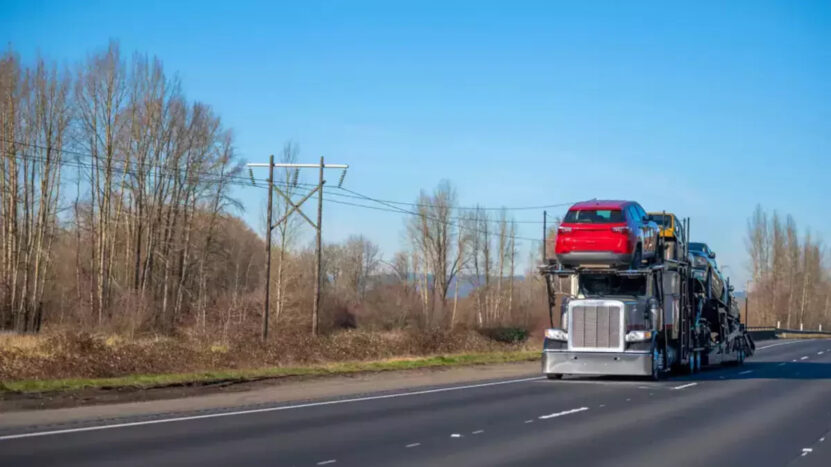
If you call ten brokers on this corridor today, the high quote and the low quote will spread $400 or $500 apart. That’s not because the high quote is gouging you. It’s because the low quote is fishing.
The pattern is the same every time: a broker takes your deposit, posts your load to a national dispatch board at the low price, and waits to see if a desperate carrier picks it up.
They usually don’t. A week later, the broker calls back and says the carriers have asked for a price increase. Now you’re at the higher price anyway, plus you’ve lost a week.
The carriers that actually move on this corridor watch the same dispatch board the brokers use. They know what a legitimate paying load looks like on a CA-to-TX run, and they ignore anything that’s $300 below market. If your quote looks too good for 2026, it isn’t a deal. It’s a delay.
What This Means Going Into Late 2026
The lane isn’t getting cheaper. Texas residential permits for 2026 are tracking 12% above 2025, suggesting the migration is still building.
Carrier capacity is regulated by hours-of-service rules and a driver pool that hasn’t grown materially in three years. Both sides of the equation point the same direction.
If you have any flexibility on when to move, the cheaper weeks are the second halves of January, May, and September.
Avoid the last week of any month (carrier capacity tightens because of corporate relo cycles) and avoid the first two weeks of August (college move-in slams every corridor that touches Texas).
The California to Texas lane is the most predictable and expensive corridor in the country right now. Plan for it, book early, and don’t trust the lowest quote you get.