
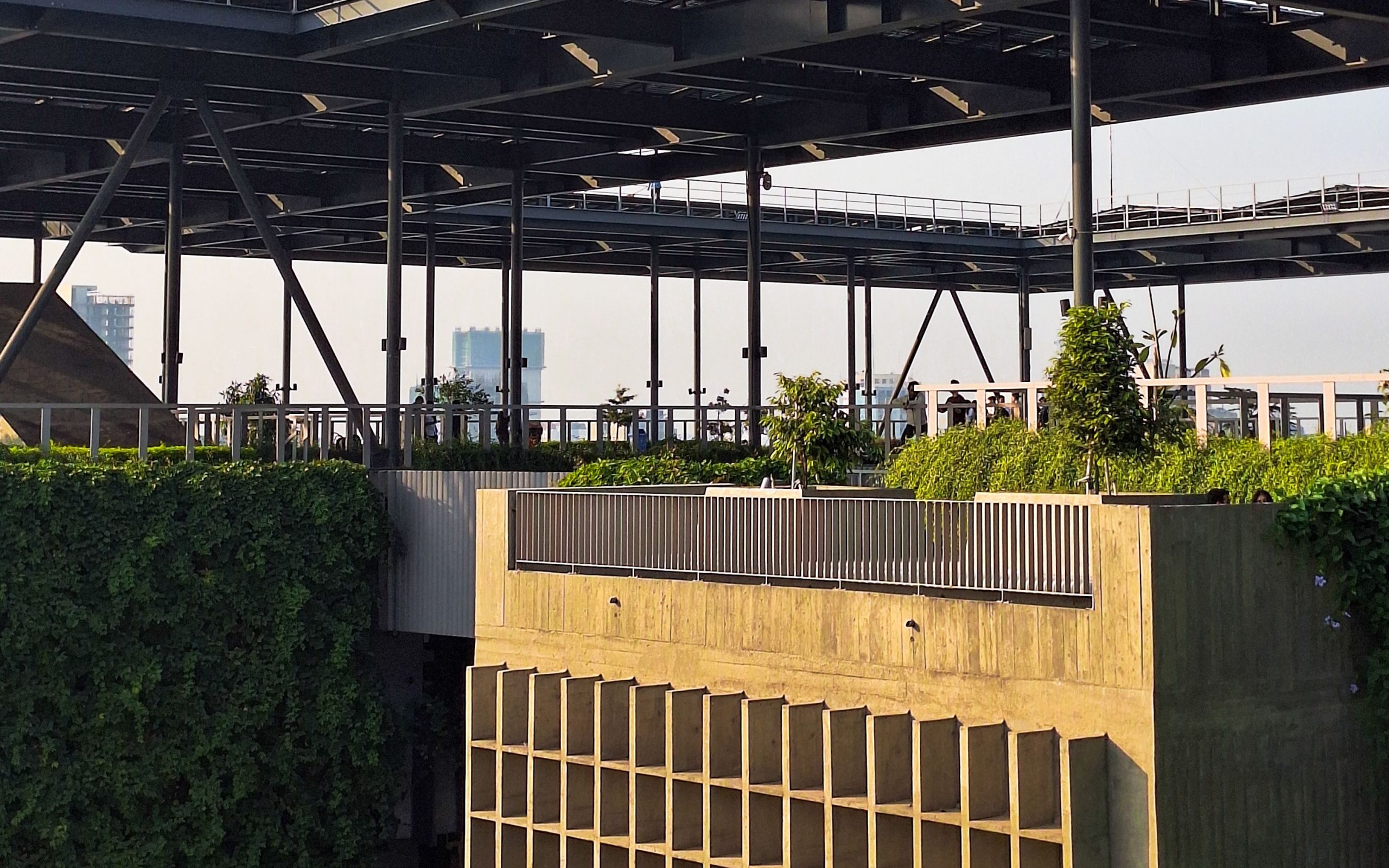
City parks, plazas, rooftops and residential courtyards are being asked to do more than provide somewhere to sit. They must manage sudden rain, soften heat, tolerate heavy use and remain maintainable in tight spaces. New material choices are changing how these places perform, not simply how they look.
The important shift is from choosing a surface in isolation to designing a working system: paving, sub-base, drainage, planting, shade and repair all affect one another. A pale paver cannot cool a plaza that has no shade; a permeable surface cannot absorb water if its base or soil is compacted. That practical relationship is where material innovation becomes useful.
On this page
- What modern materials change
- A practical material comparison
- The details that decide performance
- Frequently asked questions
What modern materials change
1. Paving can become part of the drainage system
Conventional paving sheds rain toward a drain. Permeable systems instead let water pass through joints or a porous surface into a stone reservoir below, where it can infiltrate the soil or leave through an underdrain. The U.S. Environmental Protection Agency describes permeable pavement options including pervious concrete, porous asphalt and permeable interlocking pavers. Its overview of green infrastructure systems makes clear that the pavement is only one layer of the design.
That makes these systems useful in courtyards, parking bays, paths and other places where runoff can be managed close to where it lands. But “permeable” does not mean maintenance-free: sediment can clog openings, and site soil, groundwater, contamination risk and loading all affect whether infiltration is appropriate. On a compacted or poorly draining site, an underdrain may be needed instead.
2. Surface temperature is a design choice, with caveats
Cool-pavement approaches use reflectivity, evaporation or other surface modifications to reduce pavement temperatures. The EPA reports that an Arizona pilot found conventional paving could reach 152°F at midday, while the tested cool pavements were 10–16°F cooler. That is a surface-temperature result from a specific pilot, not a promise of an equal reduction in neighborhood air temperature.
There is a trade-off: a brighter surface reflects more sunlight, which may reduce heat stored in the paving but can increase glare or reflected radiant heat for people nearby. The EPA also notes that cool pavement technologies are less established than some other heat-island strategies and have no official standard or label. I would treat a product’s cooling claim as a prompt to ask for test conditions and site-specific evidence, not as a performance guarantee. Trees, pergolas and planted edges remain essential partners because shade blocks solar exposure rather than simply changing what the paving does with it.
3. Reuse can beat a “new sustainable material”
Recycled content is only one part of a material’s environmental story. Keeping an existing component in service can avoid new manufacturing as well as disposal, provided it can be recovered, checked and reinstalled safely. AMS Institute describes an Amsterdam project investigating the reuse of concrete paving tiles; its preliminary calculation estimated an 80% CO₂ reduction compared with replacing them with new tiles and recycling the old ones. The project presents this as an estimate to be investigated against local data, not a universal saving for every paving job.
This is why I would ask “Can we keep or reuse what is already here?” before specifying an entirely new low-carbon product. The answer may be no if units are damaged, contaminated, difficult to remove intact or unsuitable for the new loads. But where reuse works, a repairable, lift-and-relay surface can preserve the value already embedded in the material.
A practical material comparison
The useful question is not which material is universally “green,” but what job it performs and what site condition could undermine that performance. These system-level distinctions help narrow the options:
| Approach | How it works outdoors | Best fit and key condition |
|---|---|---|
| Permeable paving | Water passes through porous material or open joints into a gravel layer for infiltration, storage or underdrain discharge. | Paths, courtyards and low-speed areas where runoff can be managed on site; check soil drainage, groundwater and clogging maintenance. |
| Reflective or evaporative paving | Reflects more solar energy, supports evaporation, or uses another surface modification to reduce pavement heat. | Exposed areas with heat concerns; check glare, pedestrian comfort and whether the claimed benefit is measured at the surface or in surrounding air. |
| Recovered or reused pavers | Existing units are lifted, sorted and reinstalled, retaining material value instead of replacing every unit. | Repaving projects where units can be recovered intact, tested and matched to the new layout and loading. |
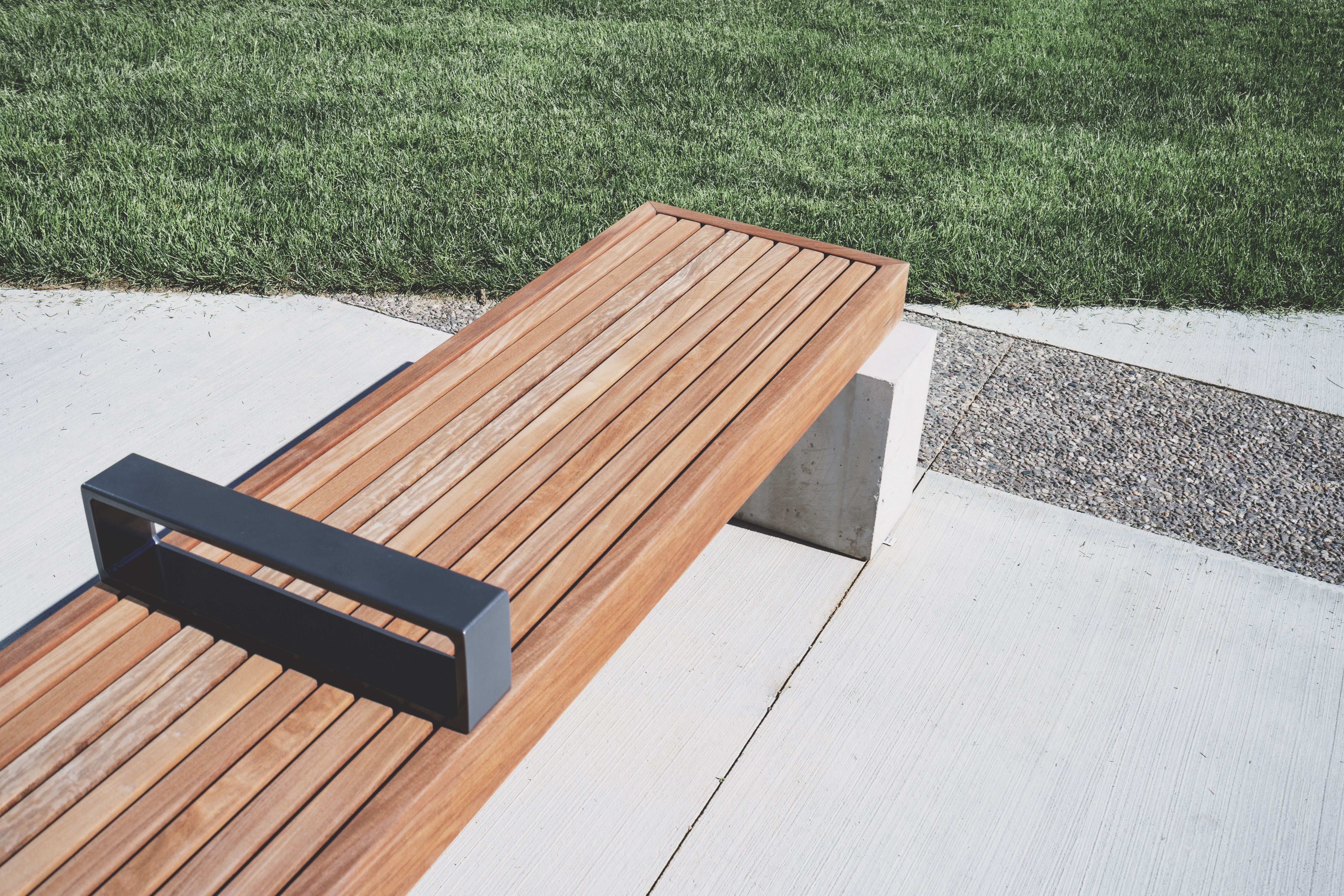
| Timber or composite finishes | Provide a warmer-feeling deck or vertical finish, while their support, fixings and joints manage water and movement. | Terraces, seating areas and courtyard edges; verify durability, fire requirements, slip performance and repair or replacement options for the specific product. |
Sources: the EPA’s green-infrastructure descriptions and cool-pavement guidance (updated December 19, 2025); AMS Institute’s Amsterdam paving-reuse project, which reports preliminary calculations for a local scenario.
The details that decide performance
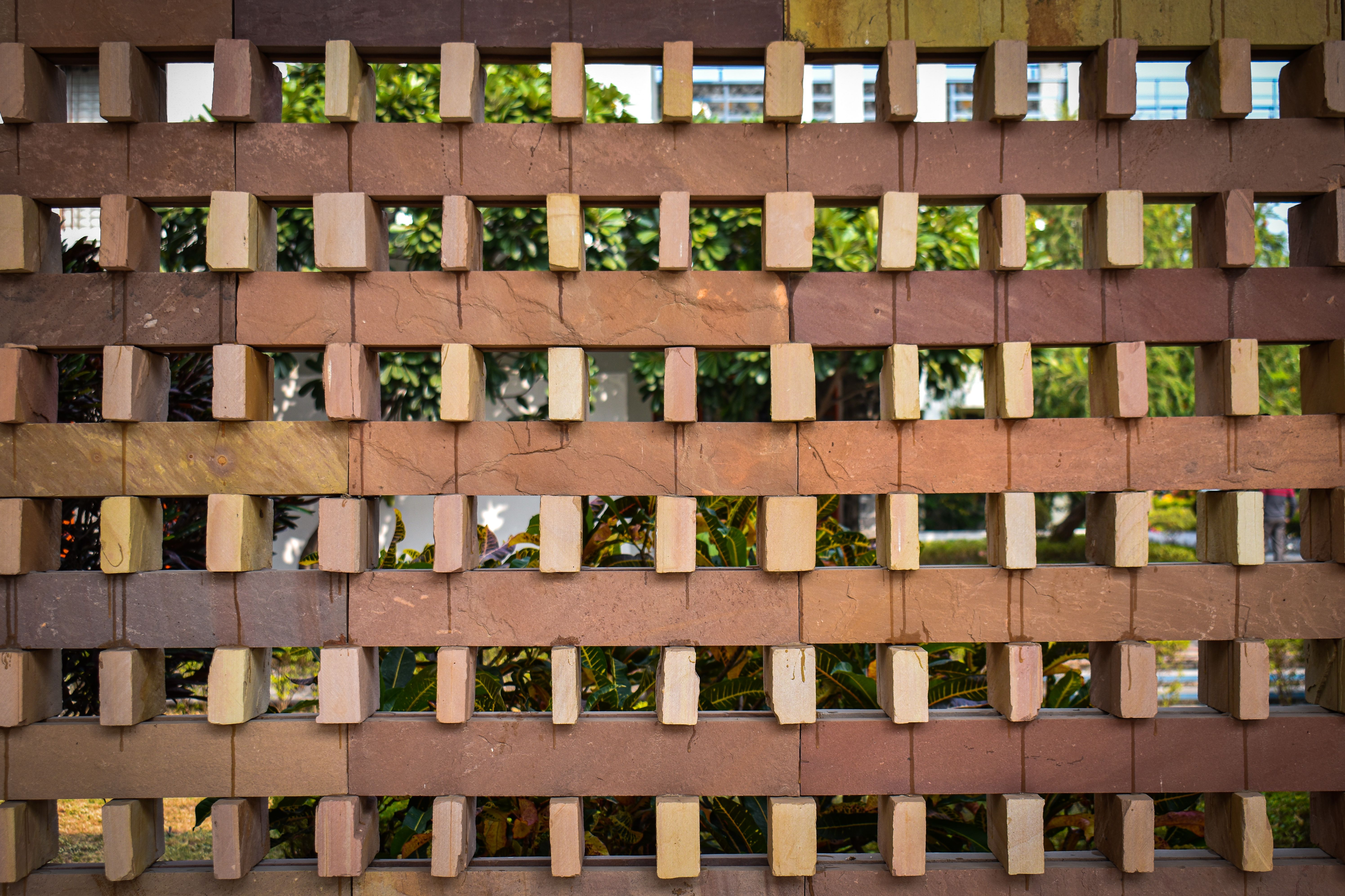
In dense neighborhoods, outdoor rooms often include raised terraces, podium gardens and shared courtyards. Here, vertical finishes contribute to the feel of a place, but the less visible decisions are just as consequential: drainage falls, waterproofing, movement joints, fixings and access for future repairs. A designer comparing masonry, timber and composite cladding should assess the full assembly and the product’s verified performance for that location, rather than assume a material category alone settles questions of durability or environmental impact.
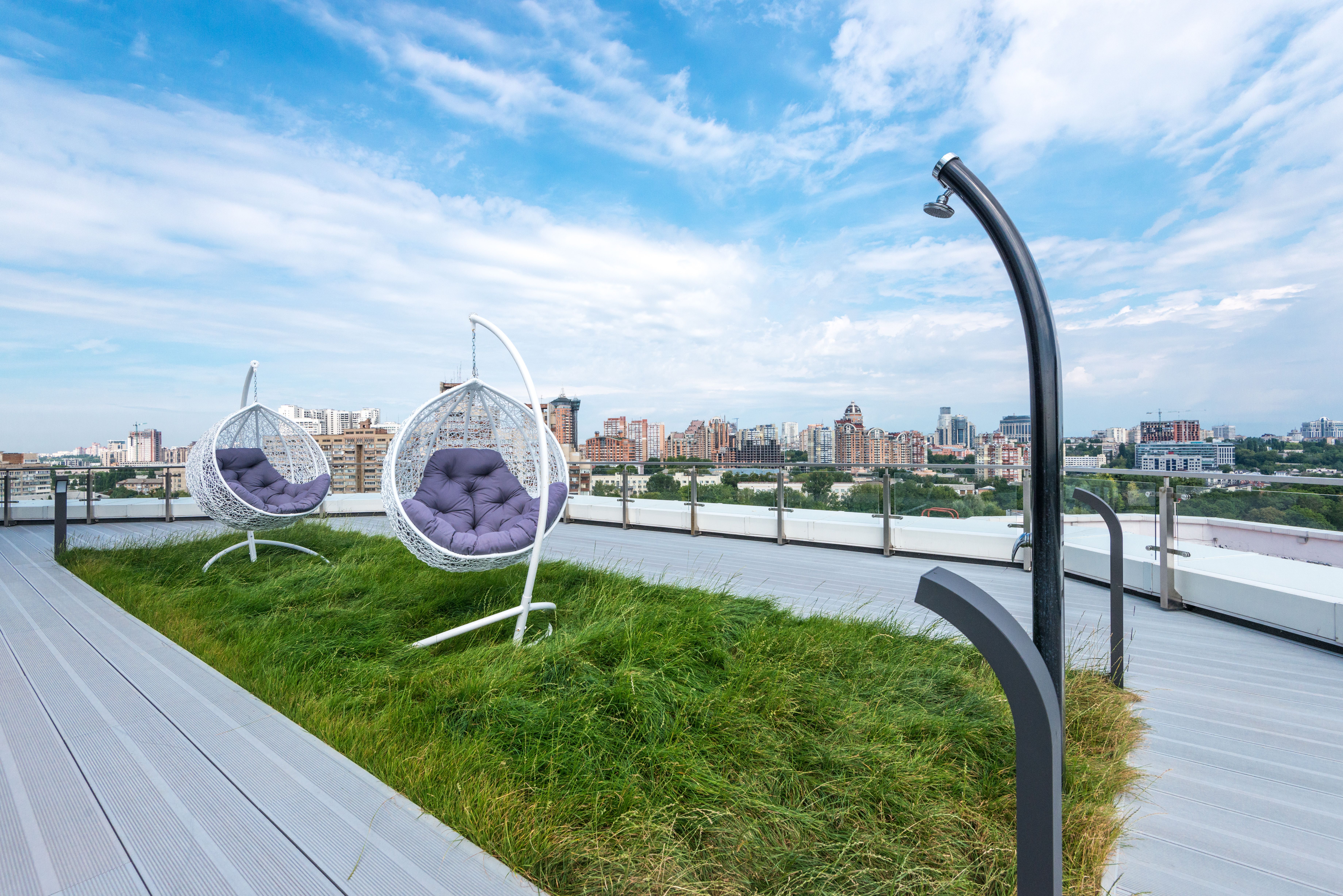
Before choosing a product, project teams can ask:
- What is the dominant local problem: runoff, heat, wear, accessibility or all four?
- Can an existing surface be repaired or reused before replacement is specified?
- What sits below the finish, and can that layer drain, support loads and be maintained?
- Can individual units or boards be replaced without demolishing a larger area?
- What product-specific evidence is available for emissions, recycled content, fire safety, slip resistance and expected maintenance?
Those questions often lead to a mixed palette rather than a single showcase material: durable paving where people walk, permeable sections where water can be captured, reused units where they remain fit for purpose, and shade or planting where people spend time. Good urban outdoor design is not a material catalogue. It is a set of choices that keeps the space comfortable, functional and repairable after the opening-day photographs are forgotten.
Frequently Asked Questions
Tomorrow’s better city spaces may not announce themselves through an exotic finish. They may be the places where rain disappears into a planted edge, shade reaches the bench at the hot end of the day, and a worn paving unit can be lifted and used again. The most transformative material is often the one that lets the whole space do more with less replacement.